


HealthTech QA Services
ByPratik Patel
Mar 31, 2026
HealthTech QA Services ensure healthcare software is safe, compliant, and accurate. Explore AI testing, LLM evaluation, security, and compliance testing strategies for healthcare applications.

Quality Assurance (QA) is the shield that protects from failure. It catches flaws before they become a critical danger for the company’s reputation and ensures that every system runs smoothly and securely.
Software development moves quickly because innovation needs to compete with deadlines. In this world, one error means that big problems begin. When a bug appears, it can instantly crash systems, reveal private information, and quickly destroy public trust in companies. QA ensures that every coded line meets release standards before availability to the market.
In an era where software dominates industries, delivering flawless products isn’t optional—it’s survival. QA is the frontline defense against catastrophic failures, financial losses, and security breaches. It’s the difference between a seamless user experience and a nightmare of glitches.
But what makes QA so crucial? How does it shape the software testing lifecycle? And if you’re looking to step into this field, where do you start?
Buckle up because mastering QA isn’t just about testing. It’s about ensuring excellence in a digital world where quality is everything. 🚀
Quality Assurance (QA) is a systematic approach to guaranteeing that products satisfy both internal and customer expectations. It encompasses systematic procedures to analyze and enhance systems or outputs.
Strategically, QA sets quality standards, audits, and provides continuous improvements to achieve customer satisfaction and maintain the organization’s reputation.
Key Objectives of Quality Assurance
The role of QA in the software quality assurance process is to block defects, boost operational efficiency, and enhance user satisfaction outcomes.
Examples of QA in Different Industries
QA is a history of developments that have led manufacturing and later software development methodologies towards product and service excellence.
QA implements proper processes that drive high-quality outcomes, while QC ensures the final product aligns with set quality standards. Here’s a comparison table that highlights the key differences between quality assurance and quality control.
| Aspects | Quality Assurance (QA) | Quality Control (QC) |
| Focus | Preventing defects | Identifying and fixing defects. |
| Approach | Process-oriented | Product-oriented |
| Objective | Ensures proper processes to maintain quality. | Detect and correct issues in final products. |
| Methods | Standards, process audits, training, and documentation. | Testing, inspections, validation. |
| When it Happens | Throughout the development lifecycle. | After production or development. |
| Responsibility | Everyone is involved in the process. | Dedicated testing/inspection teams. |
The proactive approach of Quality Assurance minimizes defect occurrence, while testing reacts to identify and resolve final product defects. For a complete breakdown of the differences between QA and Testing, here is the table:
| Aspects | Quality Assurance (QA) | Testing |
| Focus | Preventing defects | Identifying and fixing defects. |
| Approach | Improves processes to minimize errors (Proactive). | Finds and fixes errors introduced in the product (Reactive). |
| Objective | Prevent defects before testing starts. | Detect and correct defects after development. |
| When Applied | Throughout the SDLC, from requirements to deployment. | Conducted after development, during the testing phase. |
| Responsibility | It involves all team members across various roles. | Primarily the responsibility of testers, but may include developers for integration testing. |
| Outcome | Ensures software maintains quality throughout development. | Ensures software meets quality standards before release. |
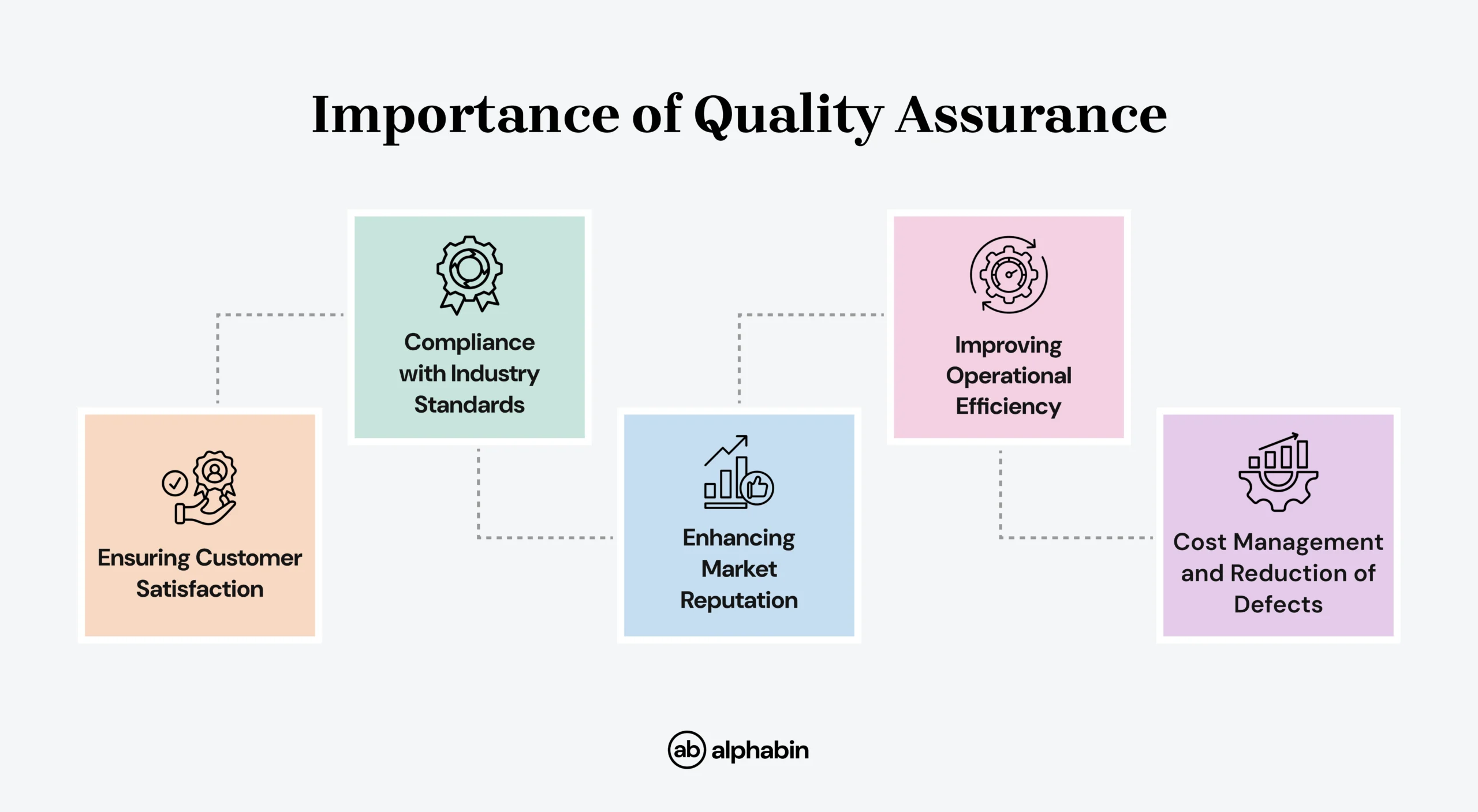
In the current market, customers have very high expectations, and even a small defect can ruin the success of a product. Here is why QA is important:
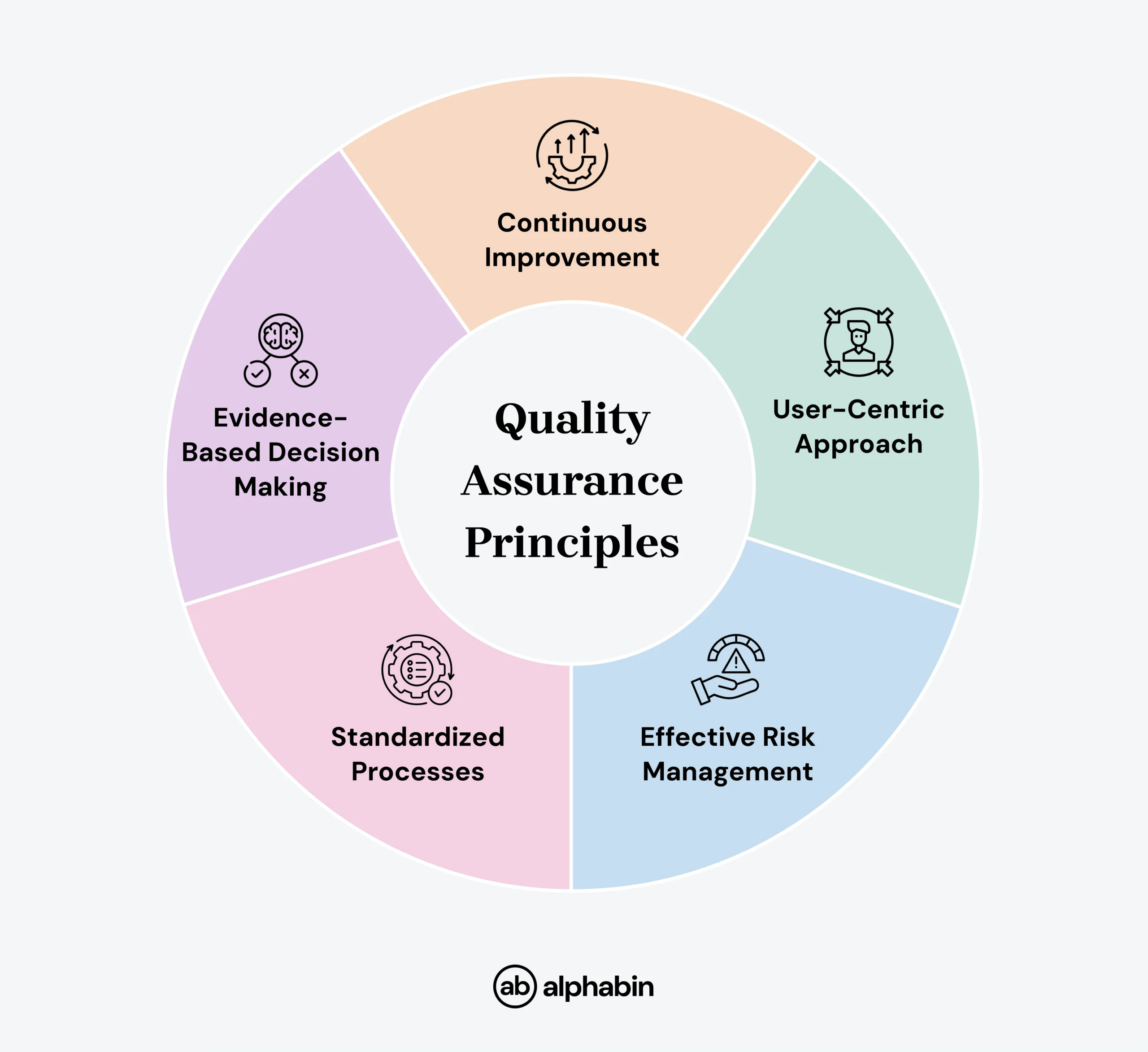
These are the principles that guide effective QA practices.
According to project requirements and organizational approach, QA uses various methodologies:
A good QA process defines a standard of quality products have to meet, as well as reducing defects in the products. Here’s a step-by-step breakdown:
Software Quality Assurance (SQA) ensures that the software meets the pre-defined standards, works as it is supposed to, and is without any bugs. It is a systematic approach to improving the development process and delivering high-quality software.
New Quality Assurance (QA) enhancement methods develop with technological progress to create more dependable and secure software programs faster. Key trends shaping QA include:
Quality Assurance is a critical process across all industries that ensures that products are of the highest quality. Through methodologies, processes, and constant improvement, companies can produce high-quality, defect-free products that improve customer satisfaction and market image.
Whether you are a novice or a seasoned expert, learning and applying QA principles can make a big difference in the success of any project. Keeping abreast of new QA trends and technologies is important to staying ahead of changing market demands.

Founder and CEO
Pratik Patel is the founder and CEO of Alphabin, an AI-powered Software Testing company. He has over 10 years of experience in building automation testing teams and leading complex projects, and has worked with startups and Fortune 500 companies to improve QA processes. At Alphabin, Pratik leads a team that uses AI to revolutionize testing in various industries, including Healthcare, PropTech, E-commerce, Fintech, and Blockchain.
ByPratik Patel
Mar 31, 2026
HealthTech QA Services ensure healthcare software is safe, compliant, and accurate. Explore AI testing, LLM evaluation, security, and compliance testing strategies for healthcare applications.

ByPratik Patel
Mar 10, 2026
Discover how AI test automation and manual testing work together to enhance quality assurance. Learn strategies, tools, and best practices for modern software testing

ByPratik Patel
Mar 5, 2026
Automation testing and AI engineering roadmap for QA professionals. Learn Playwright, Selenium, CI/CD, and AI skills to grow your tech career.