


HealthTech QA Services
ByPratik Patel
Mar 31, 2026
HealthTech QA Services ensure healthcare software is safe, compliant, and accurate. Explore AI testing, LLM evaluation, security, and compliance testing strategies for healthcare applications.

In today’s digital age, Software as a Service (SaaS) has revolutionized how businesses operate, offering cloud-based applications without the need for local installation. As the global SaaS market is expected to grow to more than $462 billion by 2028, it becomes clear that this model is a major player in the technology sector. Platforms like Salesforce, Zoom, and Netflix exemplify the SaaS trend, providing user-friendly, scalable solutions that charge based on usage.
At Alphabin, we excel in addressing challenges that arise during SaaS testing, whether related to security, performance, or scalability. When any issue surfaces, our expert team quickly identifies the root cause through advanced diagnostics and thorough testing protocols.
We ensure seamless integration and functionality, even under high-demand scenarios. By employing automated testing, real-time monitoring, and continuous integration, we rapidly respond to problems, guaranteeing that software remains robust, secure, and up-to-date, ultimately ensuring a flawless user experience for businesses of all sizes.
However, as these platforms become more integral to business operations, SaaS testing becomes equally crucial. Both in terms of functionality and security, the performance must be always consistent, and the reliability must be very high because these types of applications are expected to perform highly available to a large user base of customer organizations.
Testing is not just about verifying that a product works correctly, but also ensuring that it is adaptable, secure, and able to meet the demands of today’s fast-paced development environment. It involves making sure the product is flexible, secure, and can handle rapid changes efficiently.
Software as a Service application must therefore be tested to maintain the quality, security, and functionality required for a SaaS. The testing activities that come under it are compatibility testing, performance testing, security testing, API testing, and usability testing.
Continuous Delivery is important for SaaS and Cloud applications as it allows for efficient and frequent delivery of software changes to the customers, which in turn means the provision of newer enhancements and security updates from time to time. Cloud platforms, for instance, take this even further by offering more flexibility in the form of scalable platform infrastructure that enables one to deploy, test as well as scale applications with relative ease and almost no interruption.
Now, let’s look at how the rapid advancement in the field of technology, and the application of Artificial Intelligence (AI) along with Machine learning (ML) is a unique opportunity while operating SaaS applications. All these developments are changing software by availing new opportunities and improving functionality, productivity, and growth.
According to Verified Market Research, the Artificial Intelligence SAAS market was valued at USD 71.54 Billion in 2024 and is forecasted to reach USD 775.44 billion by 2031, registering a CAGR of 38.28% from 2024 to 2031. Organizations that adopt this integration will be at the forefront of the digital revolution, a move that will improve productivity and innovative levels.
Many organizations face the challenge of delivering high-quality products swiftly to maintain a competitive edge. With the growing complexity and scalability demands of SaaS applications, traditional QA methods often fall short. This is where advanced automation testing becomes a game-changer.
Many industries are grappling with the need for a robust QA strategy that can keep up with rapid development cycles and evolving customer expectations. Automation testing offers a solution by streamlining QA processes, reducing time-to-market, and ensuring consistent quality. By integrating automated tests early in the development cycle, you gain rapid feedback and facilitate continuous integration, addressing issues before they impact the end product.
Automation efficiently handles repetitive and complex test cases, freeing up valuable resources and enabling your team to focus on innovation. Tailored automation strategies address the unique needs of your SaaS product, covering critical aspects such as functionality, performance, and security.
At Alphabin, we customize our automated testing approaches to your SaaS product’s specific requirements. Our team of experts designs comprehensive test suites that cover critical functionality, performance, and security aspects, delivering reliable and scalable results. Trust us to elevate your QA strategy, enabling you to launch high-quality SaaS products faster and with greater confidence.
Now, we will be proceeding to Advanced SaaS Software Testing Techniques that include the use of state-of-art tools along with several proper testing methods and processes to enhance the software quality and performance in various dynamic cloud settings.
This encompasses data-driven testing for handling large data sets, testing of microservice architecture, and disaster testing for assessing the failover functionality. Automated testing with AI, as well as the CI/CD approach, synchronizes the processes to be scalable and secure for the users.
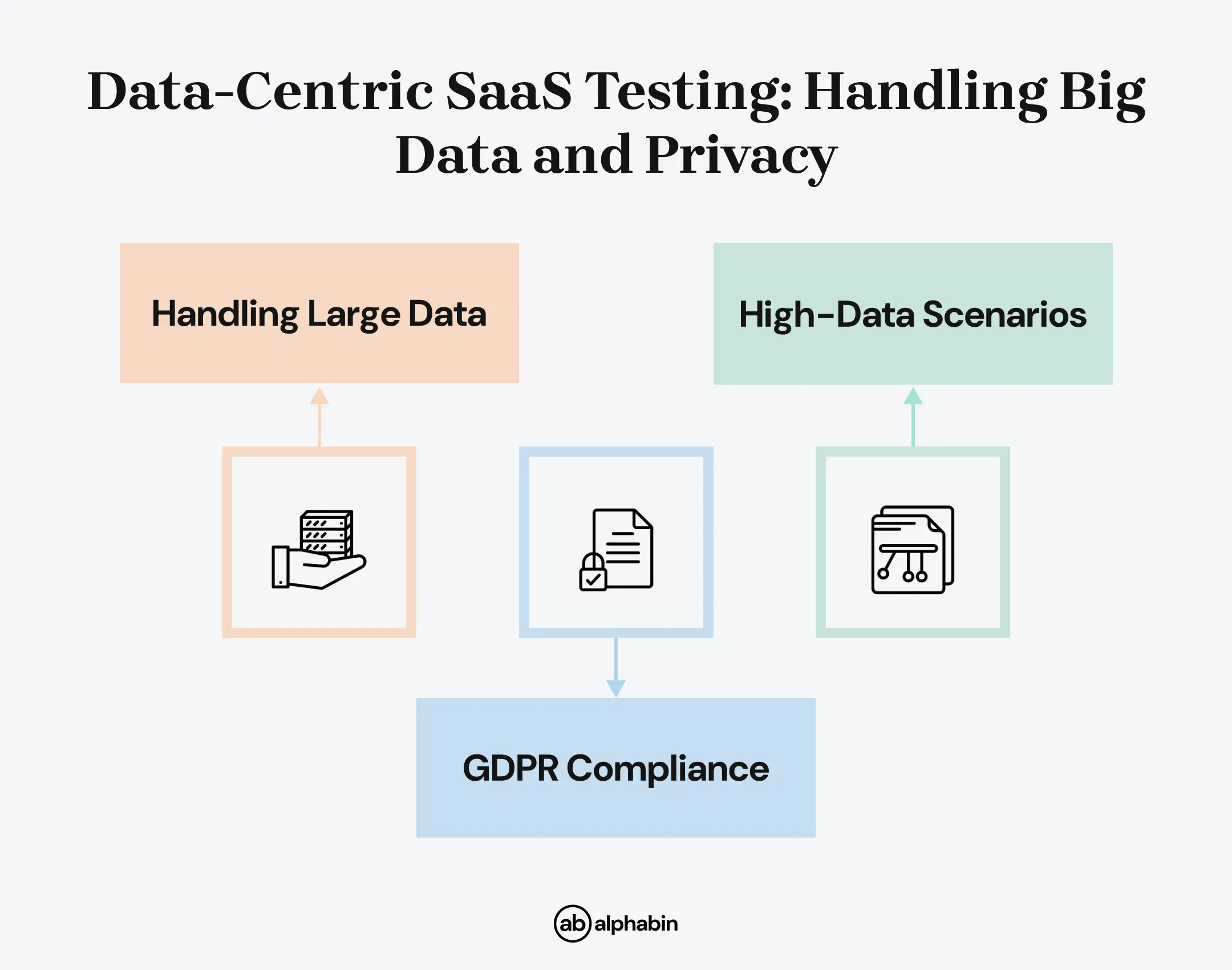
Data-driven SaaS testing guarantees that the cloud applications deal with large data while meeting laws regarding privacy. As the volume of data handled through SaaS platforms continues to rise, the need for competent testing cannot be overemphasized due to the performance, scalability, and security implications that may occur.
Key Points:
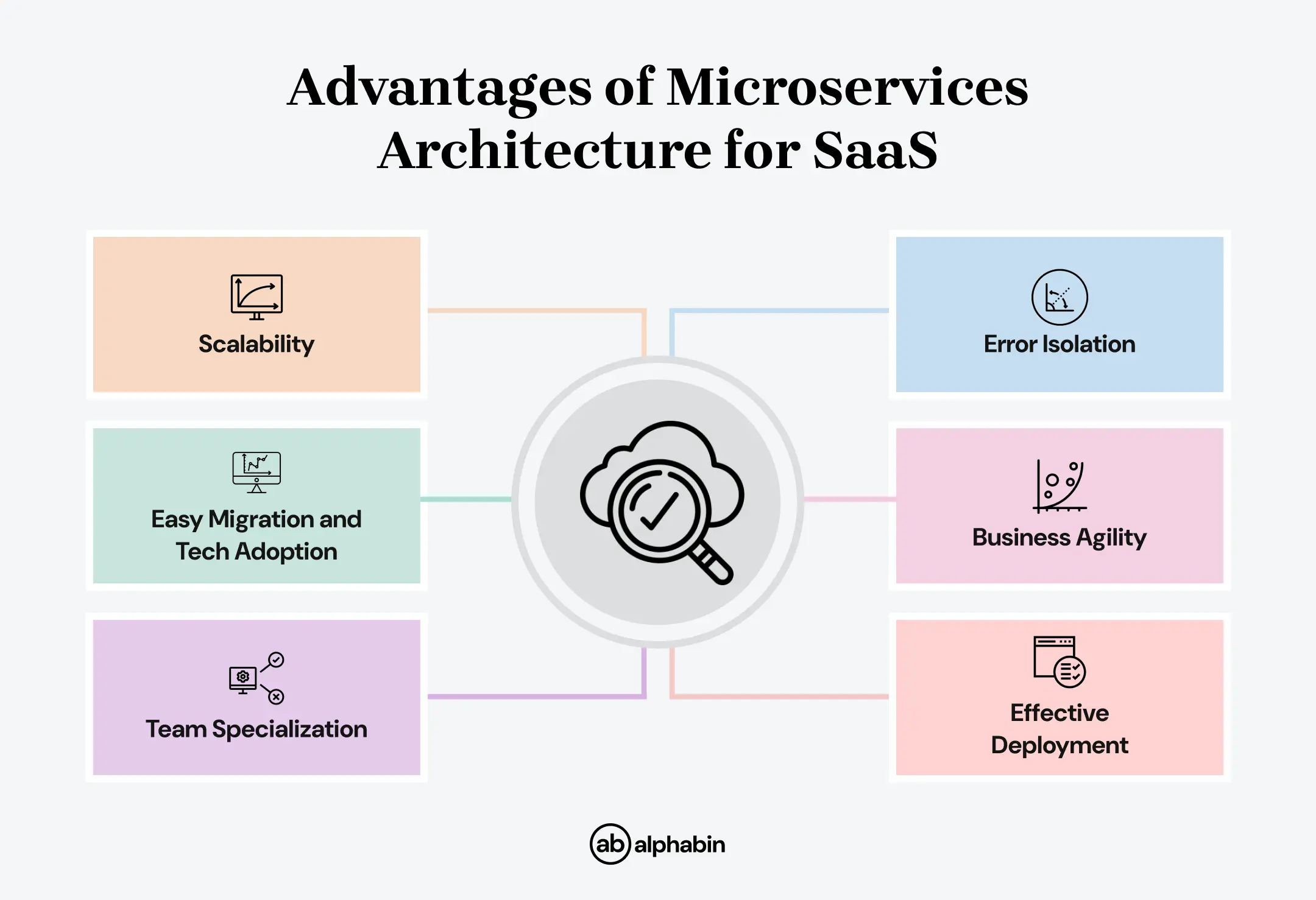
Microservices architecture in SaaS applications breaks down large systems into smaller, independent services. These mini-applications can operate individually, while communication between them is often handled via lightweight protocols like REST APIs. While this design offers great flexibility, it also presents unique challenges when it comes to testing.
One significant challenge is that different teams often develop separate microservices. This isolation can lead to a lack of horizontal communication between teams, making it difficult to ensure that all services are compatible and perform well together.
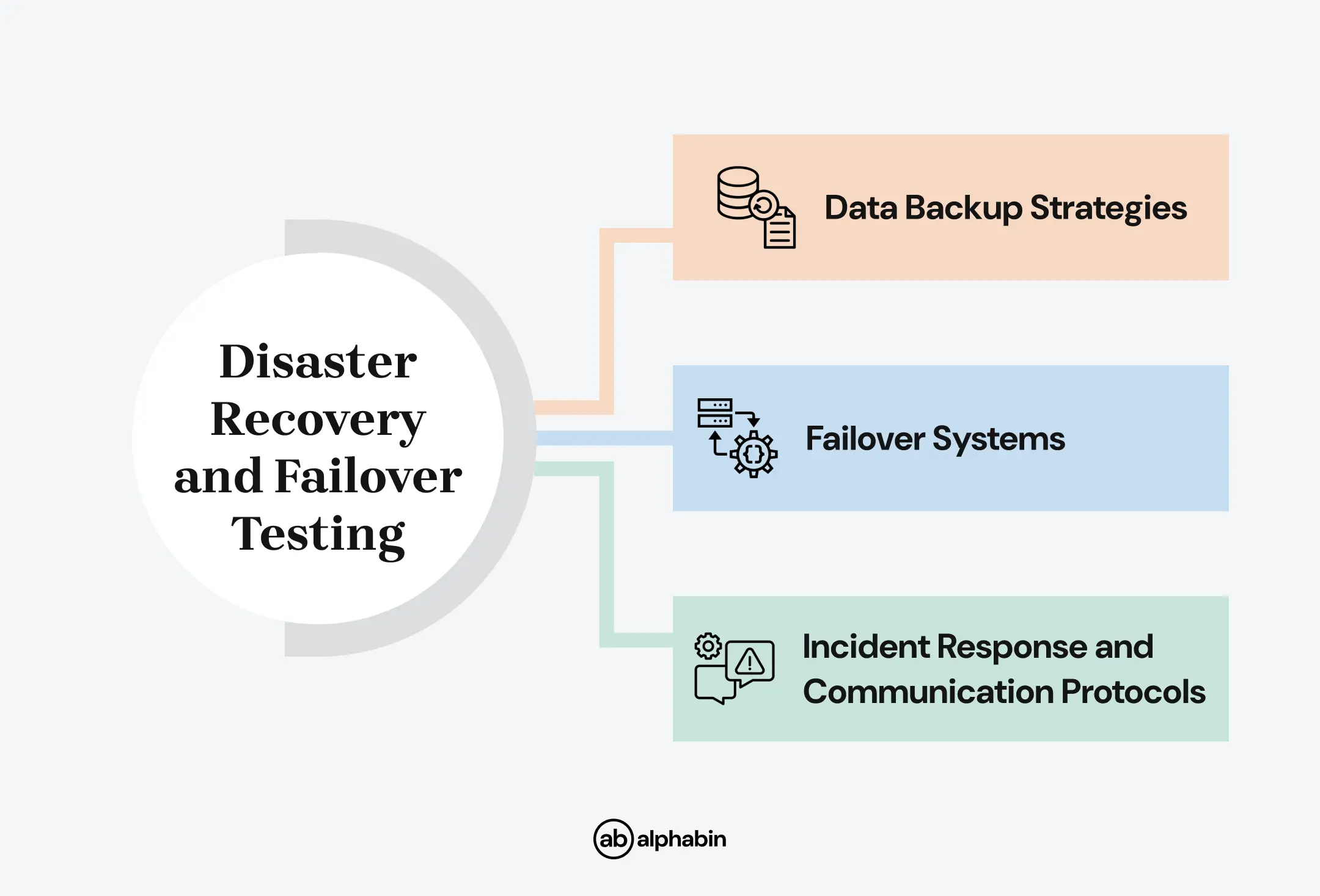
Imagine facing unexpected downtime on your SaaS platform for even a few moments. In that brief span, you risk losing revenue, damaging customer trust, and encountering compliance issues. Transitioning to SaaS offers benefits like scalability and innovation, but traditional disaster recovery plans often fail to account for SaaS’s unique architecture.
It isn’t just about having firewalls and strong passwords—this is about achieving comprehensive security across your back-end right through to front-end add-ons and third-party interfaces to protect operations from a range of contemporary challenges such as hacking and human error.
Software as a Service (SaaS) applications serve as the cornerstone of business operations, offering unmatched flexibility and scalability. Your SaaS solution must address these needs effectively because any software managing customer relationships, finances, or project workflows must ‘work’ in the real world. It is here that solutions like user behavior simulation and load testing can be of utmost importance.
User behavior simulation and load testing can be considered key practices enabling validation of the performance and reliability of the SaaS application under different conditions. By replicating real-world usage scenarios, these tests help identify and address performance bottlenecks, scalability issues, and stability concerns before they impact your users. It not only benefits the end user but also allows for cost-efficient infrastructure management and compliance with service level agreements while competing in the rapidly growing SaaS market.
Imagine a future where every SaaS platform is fully optimized for seamless use by individuals with disabilities. In this world, accessibility turns into a value as, like in the movie, everyone with some sort of disability can move and interact with software products and applications as freely as those without such issues.
There’s another reason it is important to include: it is not only the right thing to do, but it is also good for business. Making the SaaS products accessible helps in improving the reach of a business to its consumers. It improves the satisfaction of the consumers and also improves the compliance of the business to the world standards in as much as promoting fairness and equality of the buyers.
Ensuring usability for diverse audiences, including those with disabilities, is crucial in SaaS development. This refers to making the user experience flexible in such a way that it will suit the needs of all users. Usability requires that your software tools can effectively be used by persons with physical challenges, those with learning difficulties, or the physically or mentally challenged.
Now, let’s dive into how to choose between manual and automation testing for your SaaS product. Therefore, before choosing which test method to apply, it is crucial to understand the specific advantages of the two testing methods to meet your product’s goals of performance and quality.
Both are good—manual testing for the highly innovative, exploratory, and erratically developing work, which will always remain highly unpredictable, and automated for long-term and frequently repeated work that requires thorough testing.
On the other hand, automation testing is ideal for repetitive and large-scale tasks, offering speed and efficiency but missing the human insight.
Now, let’s explore how to choose between the two:
At Alphabin, we offer you the solutions on how to use the right amount of manual and automated testing for your SaaS product to be perfect. Our experience allows us to tailor a testing strategy that aligns with your product’s unique needs, maximizing efficiency and guaranteeing exceptional results. Whether you choose manual, automation, or a hybrid approach, Alphabin ensures your SaaS product stays ahead of the competition.
Post-deployment testing helps to prevent SaaS apps from cracking and to enhance their performance after deployment. Once issues are known, they can be monitored continuously, and where appropriate, alerts can then be produced. Measures such as availability, response times, and error rates are helpful in a simple checkup of the system.
User feedback is vital for ongoing improvements, with direct surveys and bug reports feeding into iterative testing cycles. It improves satisfaction and user-driven changes since the process is based on the practical usage of the product.
Key Points:
Collaborative testing across teams and clouds is crucial for SaaS environments that demand agility and adaptability. It means one has to have a close collaboration of several groups or parties—the development, operation, and quality assurance to release and test applications more quickly. Another critical situation is when testing is conducted from one cloud to another since teams can work remotely and still be in coordination.
At Alphabin, we integrate this strategy by fostering collaboration across cloud environments, ensuring efficient testing with reduced stoppage. Our expertise lies in optimizing communication between teams and using advanced cloud-based tools, improving agility, scalability, and performance for businesses in rapidly growing SaaS markets.
We enhance collaboration by:

Founder and CEO
Pratik Patel is the founder and CEO of Alphabin, an AI-powered Software Testing company. He has over 10 years of experience in building automation testing teams and leading complex projects, and has worked with startups and Fortune 500 companies to improve QA processes. At Alphabin, Pratik leads a team that uses AI to revolutionize testing in various industries, including Healthcare, PropTech, E-commerce, Fintech, and Blockchain.
ByPratik Patel
Mar 31, 2026
HealthTech QA Services ensure healthcare software is safe, compliant, and accurate. Explore AI testing, LLM evaluation, security, and compliance testing strategies for healthcare applications.

ByPratik Patel
Mar 10, 2026
Discover how AI test automation and manual testing work together to enhance quality assurance. Learn strategies, tools, and best practices for modern software testing

ByPratik Patel
Mar 5, 2026
Automation testing and AI engineering roadmap for QA professionals. Learn Playwright, Selenium, CI/CD, and AI skills to grow your tech career.